Oopbuy Finds Spreadsheet catalogue for UK parcels
Recent listings by category, and what each category means once it has to fit a UK shipping line.
What is the Oopbuy Finds Spreadsheet
It is a catalogue of picks you can browse: recent listings from Taobao, Weidian and 1688 sellers, sorted into categories, each with a page carrying the shop link. You find something, copy the link, and paste it into Oopbuy, which buys it for you and ships it on.
It is not a spreadsheet in the office-software sense and there is nothing to download. The name stuck because the earliest finds lists were shared that way; today it means a browsable product catalogue.
This edition is written for UK buyers. The catalogue part is the same as anywhere else. The rest of the site exists because the hard decisions for a UK parcel come after you have found the item: which line, which postcode rules, which delivery number to believe.
How to use Oopbuy and this catalogue
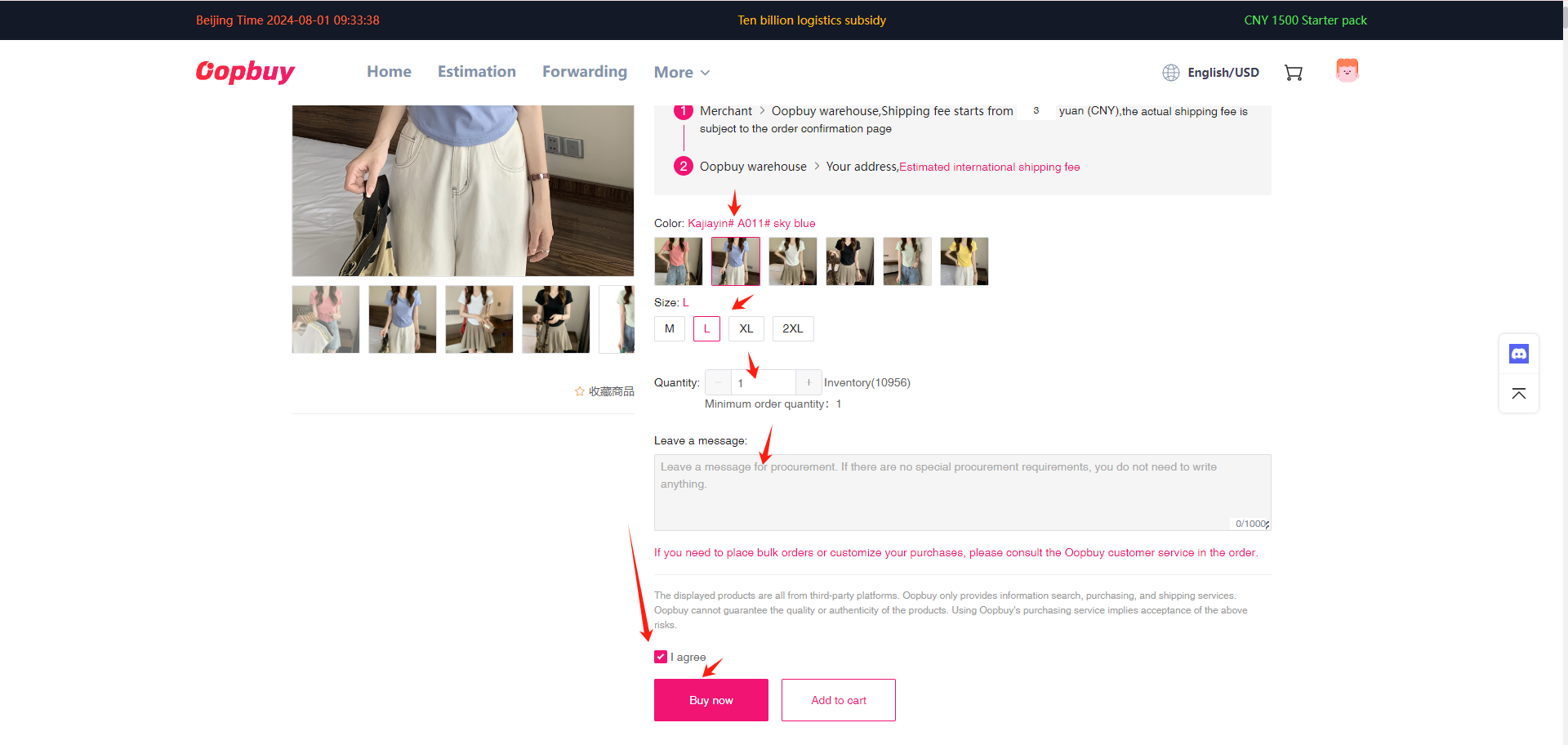
Search for an item or open a category, then follow the listing to its original shop link. Compare the seller description and variant choices; a catalogue thumbnail alone is not enough to order. Paste the original item link into Oopbuy, confirm the options and pay for the goods and domestic postage.
After the warehouse receives it, review photos before requesting international shipping. A second payment covers freight and relevant parcel charges. Our illustrated official 11-step guide shows each control in order, from registration to tracking.
Browse by category with the UK line in mind
The same sixteen categories as the homepage wall. The tag beside each is the trait that decides your line later: soft goods fit every UK line, batteries and fragrance fit only a few.
 Tees and topsLight, folds flatCategory
 Hoodies and sweatshirtsSoft, vacuum bag friendlyCategory
 JoggersSoft goodsCategory
 DenimDense for its sizeCategory
 Womenswear searchSearch resultsSearch results
 Football shirtsLight, folds flatCategory
 Coats and puffersBulk drives the priceCategory
 Caps and hatsCrushable unless boxedCategory
 BeltsSmall, often boxedCategory
 Sunglasses and framesCase adds volumeCategory
 JewelleryTiny, check the lineCategory
 BagsVolume, not weightCategory
 TrainersShoe box decisionCategory
 WatchesCheck whether it has a batteryCategory
 Gadgets and audioCheck whether it has a batteryCategory
 Fragrance and setsLiquid lines onlyCategory
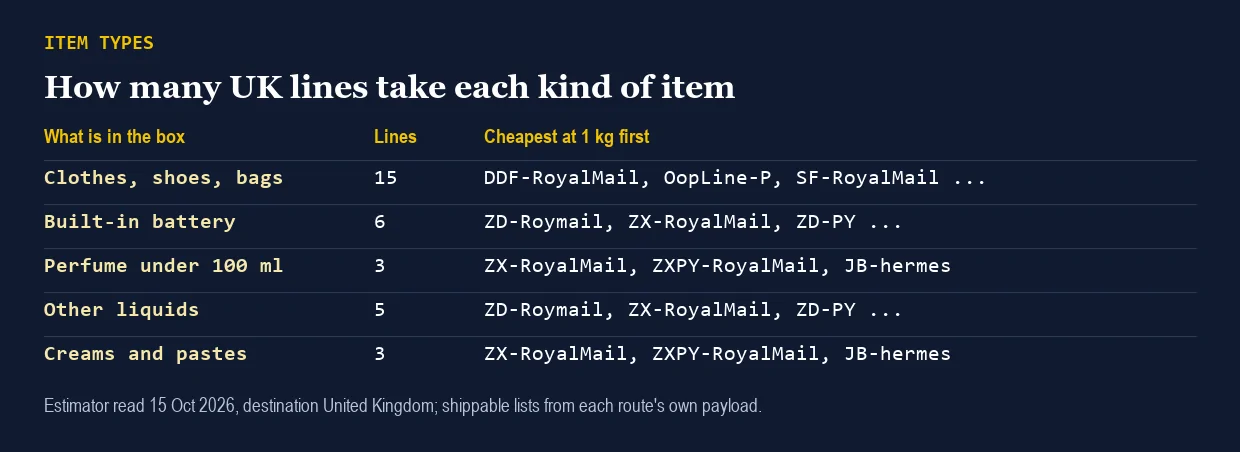
All fifteen UK lines take clothes, shoes and bags. Six take items with a built-in battery, five take liquids, three take perfume under 100 ml and three take creams and pastes. Those counts come from each line's shippable list in the estimator payload, so they describe what the line accepts, not what customs will think of it.
How to choose an item for a UK parcel
Two things decide what an item costs to ship, and neither is on the listing: how much space its box takes and whether anything inside counts as restricted.
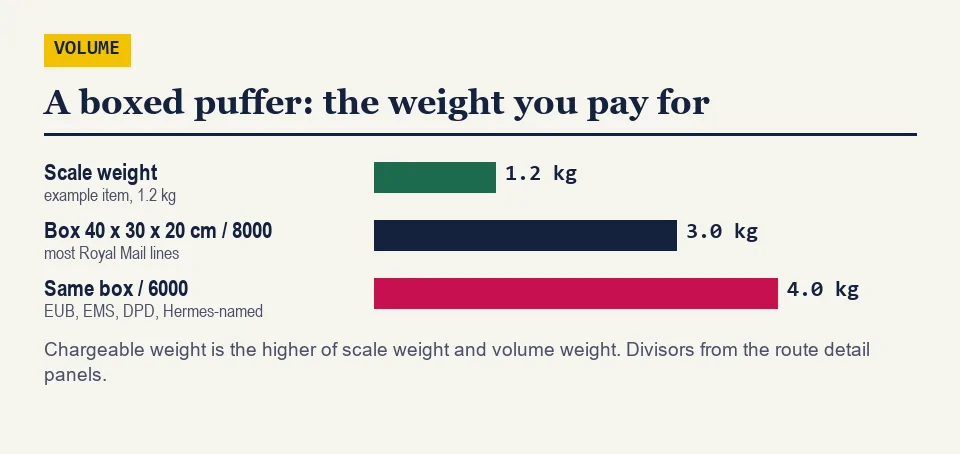
Volume first. Every UK line bills the higher of scale weight and volume weight. Eight lines divide box volume by 8000; EUB, EMS, the DPD pair and the Hermes-named line divide by 6000. A boxed puffer jacket that weighs 1.2 kg can bill as 3 kg or 4 kg depending on the line.
Then contents. A hoodie with a heated panel or trainers with light-up soles carry a battery, and only six UK lines accept that. Perfume narrows the board to three. If you can choose between two versions of an item, the one without the battery is the one that keeps the cheap lines open.
How to choose a seller
Read the original listing, not only the catalogue description. Look for several detailed photos, measurements in centimetres, material descriptions and a clear dispatch expectation. Check whether reviews describe this exact item and variant. Large sales counts or reused studio pictures are clues to investigate, not proof.
- Before payment: save the item URL, chosen size/colour and the seller size chart. Ask the agent to confirm an unclear option rather than choosing a similar-looking button.
- Compare like for like: two identical photos can lead to different sellers, batches, materials or return terms. Compare the specification and domestic postage, not just the headline price.
- If evidence is missing: ask for it or choose another listing. A pre-order or customised product may have a long lead time and limited returns.
For a UK parcel, check hidden batteries, liquid volume and fragile packaging too. The warehouse checklist helps compare what arrives with what you ordered.
How to choose a spreadsheet site
Hold any finds catalogue to four tests, this one included. Every price or time should carry the day it was read. Category links should work; dead ones mean nobody is looking after it. It should say where its numbers come from. And it should admit what it cannot know: no catalogue can promise a delivery date for a line it does not run.
Our readings are dated 15 October 2026 and listed on the updates page. If a link here is dead, tell us.
Choose the product and size before the shipping line
Measure a garment that already fits, laid flat: chest, shoulder, length and sleeve. Match those measurements to the seller chart and its stated tolerance. For shoes, use foot length and the seller chart together; a UK size label alone is not a reliable conversion. Ask for an insole measurement when the chart is unclear.
Example: if your usual hoodie measures 58 cm across the chest, compare that with the listing’s flat chest measurement, not its “L” label. Ask whether a “116 cm chest” means circumference before interpreting it as a 58 cm flat width. If the seller cannot explain, skip the uncertain purchase.
For electronics, check voltage, plug, battery type and the functions you need before ordering. A photograph cannot certify electrical safety, waterproofing or performance. Fragrance, batteries and jewellery can also have route restrictions; check the actual goods with support before paying.